The Invisible Treatment: How Post-Production Chemical Finishes Compromise Sewability and Long-Term Garment Integrity

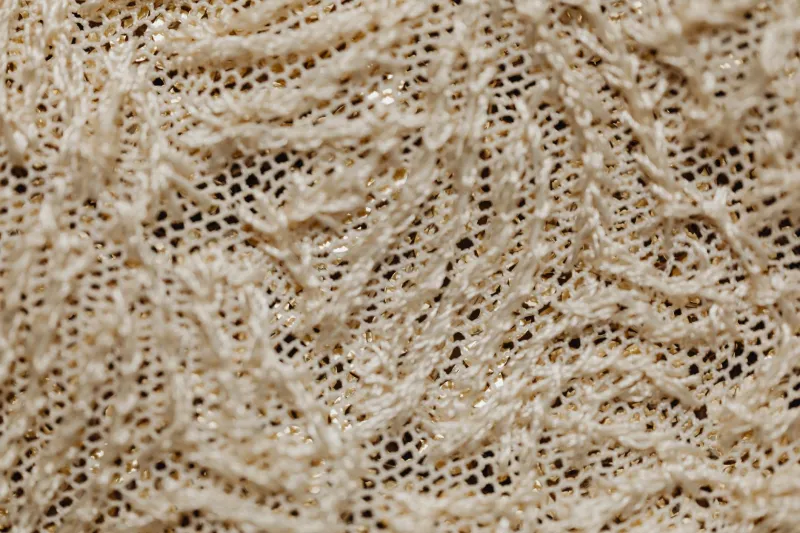
Photo by Photo by Lalit Kumar on Unsplash on Unsplash
A bolt of fabric arrives in the workroom with a certain weight, hand, and apparent quality. The weave looks even, the color is consistent, and the fiber content listed on the end label corresponds to the intended application. What that label almost certainly does not disclose is the series of chemical treatments the fabric received after leaving the loom—treatments that may fundamentally alter how the cloth responds to cutting, sewing, pressing, and eventual laundering.
Post-production finishing is standard practice across the textile industry. Mills apply chemical agents to improve the fabric's appearance in retail settings, extend its functional properties, or meet regulatory requirements. The problem for designers and seamstresses is not that these finishes exist, but that they are largely invisible, inconsistently disclosed, and capable of producing construction failures that are easily misattributed to technique rather than material chemistry.
Why Finishes Matter More Than Their Omission from Labels Suggests
The US textile labeling system requires disclosure of fiber content and country of origin, but chemical finishes applied to the surface or structure of a fabric are not subject to mandatory consumer-facing disclosure. A cotton shirting fabric may carry a durable press treatment that introduces formaldehyde-based cross-linking agents into the fiber structure. A technical outerwear fabric may be treated with a durable water repellent (DWR) coating that fundamentally changes how the fabric responds to needle penetration and seam sealing. A curtain-weight fabric converted to apparel use may carry a flame retardant finish that makes it stiff, prone to needle breakage, and resistant to the steam pressing that tailored construction demands.
None of these treatments will appear on the bolt end. The designer who selects the fabric based on visual and tactile assessment alone will encounter their effects only after cutting has begun—at which point the investment in material and labor is already committed.
Sizing: The Finish That Misrepresents the Fabric You Are Buying
Sizing is applied to woven fabrics—particularly cotton and linen—to add body, improve surface smoothness, and protect the cloth during shipping and retail handling. Starch-based sizing is traditional and water-soluble; it washes out in the first laundering and leaves the fabric with its true, unfinished character. This is generally benign, though it means the fabric that arrives in the workroom is stiffer and more cooperative to cut than it will be in the finished garment—a distinction with real consequences for drape-dependent designs.
More problematic are synthetic sizing agents—polyvinyl alcohol, polyacrylate compounds, or thermoplastic resins—applied to achieve a more aggressive body that persists through one or more launderings. These agents can interfere with seam allowance behavior by creating a surface film that resists the needle's penetration path, producing skipped stitches or uneven stitch tension. They can also cause thread breakage at elevated machine speeds by increasing surface friction in the needle eye.
The practical test: wet a corner of the fabric with water and allow it to dry. If the hand changes significantly—becoming softer, more pliable, or more fluid—the fabric carries a water-soluble finish that will alter its character after the first wash. If the hand remains largely unchanged, the finish is either durable or absent.
Durable Press and Crease-Resistant Treatments: Cross-Linking and Its Costs
Durable press finishes—marketed under trade names such as Wrinkle-Free, Easy Care, or No-Iron—are among the most widely applied chemical treatments in mass-market cotton apparel fabrics. They function by introducing chemical cross-links between cellulose polymer chains within the cotton fiber, preventing the fiber from shifting position when wet and thereby reducing wrinkling after laundering.
The cross-linking chemistry most commonly employed historically involves N-methylol compounds derived from formaldehyde, though low-formaldehyde and formaldehyde-free alternatives using polycarboxylic acids (such as BTCA) are increasingly available. Regardless of the specific chemistry, the structural consequence is the same: the cotton fiber becomes stiffer, less extensible, and more brittle at the molecular level.
For garment construction, this brittleness has several practical implications. Needle penetration through a heavily cross-linked cotton fabric generates higher localized stress at the needle entry point, increasing the likelihood of needle cutting—where the needle severs fiber rather than deflecting it. Seams in durable press fabrics tend to exhibit lower tear strength than equivalent seams in untreated cotton, because the cross-linked fibers cannot redistribute stress as effectively along the seam line.
Pressing behavior is also compromised. The cross-links that prevent wrinkling in laundering also resist the steam and pressure of a pressing iron, making it difficult to achieve the crisp edge finishes that tailored garments require. Attempting to compensate with higher iron temperatures risks scorching the treated surface, which discolors and cannot be recovered.
Designers working with shirting and bottom-weight cottons for tailored applications should specifically inquire whether the fabric carries a durable press finish and, where possible, select untreated alternatives when construction precision is a priority.
Water Repellent Finishes: DWR and the Needle Penetration Problem
Durable water repellent coatings are applied to outerwear and performance fabrics to cause water to bead and roll off the surface rather than being absorbed into the fiber structure. Conventional DWR formulations have historically used fluorinated compounds (PFAS chemistry), though the industry is transitioning toward fluorine-free alternatives under pressure from environmental regulations and retailer commitments.
For sewability, the relevant property of any DWR finish is its effect on needle penetration and thread lubrication. The hydrophobic surface created by DWR treatment repels the moisture that normally lubricates needle passage through a tightly woven technical fabric. This increases needle heat from friction—particularly at high sewing speeds—which can cause thread melting, needle deflection, and seam distortion in synthetic-fiber fabrics.
DWR-treated fabrics also resist the adhesion of seam sealing tape, a critical construction element in waterproof outerwear. If the DWR has been applied after seam sealing in the original manufacturing process, the tape bond may be compromised. Designers constructing garments from DWR-treated fabrics sourced as yardage should use ballpoint or Microtex needles sized appropriately for the fabric weight, reduce sewing speed, and test seam tape adhesion on a sample before committing to the full construction.
Flame Retardant Finishes: Regulatory Compliance at a Construction Cost
Flame retardant finishes are applied to fabrics intended for children's sleepwear, upholstery, theatrical costumes, and certain workwear categories under US federal and state regulations. When these fabrics migrate into general apparel production—through deadstock sourcing, fabric conversion, or uninformed purchasing—the flame retardant chemistry introduces a set of construction challenges that are difficult to work around.
Phosphorus-based and halogenated flame retardant compounds add stiffness and weight to the fabric structure. They reduce the fabric's responsiveness to steam pressing, making it resistant to the blocking and shaping that structured garment construction requires. Needle breakage is more common in heavily treated flame retardant fabrics, particularly in tightly woven substrates. Seam allowances in these fabrics may also fray more aggressively than expected, as the finish can weaken fiber-to-fiber cohesion at cut edges.
For designers sourcing deadstock or converting non-apparel fabrics, identifying flame retardant treatments before cutting is essential. One field test: hold a small scrap of fabric above a flame source briefly and observe combustion behavior. A fabric that resists ignition, chars rather than burns, or self-extinguishes rapidly is likely to carry a flame retardant treatment. This test should be conducted with appropriate safety precautions and only on small samples in a controlled environment.
Building a Pre-Cutting Evaluation Protocol
A systematic approach to finish identification before cutting begins requires very little specialized equipment. The following sequence addresses the most common problematic finishes:
First, assess hand against a known untreated reference fabric of the same fiber and weave type. Unusual stiffness, surface slickness, or an artificial body that does not correspond to the fabric's weight suggests a finish is present.
Second, perform the wet-dry test described above for sizing. Third, attempt a seam press on a scrap sample at the temperature appropriate to the fiber content. Resistance to pressing, glazing, or surface discoloration at normal pressing temperatures indicates a finish that will complicate construction.
Fourth, sew a test seam at production speed and examine the seam line for skipped stitches, thread breakage, or needle cutting damage. Fifth, launder the test sample according to the intended care instruction and compare hand, dimension, and seam integrity before and after.
This protocol adds time to the pre-production process, but it converts invisible chemistry into visible information—information that determines whether the fabric is genuinely suitable for the garment it is intended to become.