Fabric & Handle The technical guide to textiles and fashion craft

Fabric & Handle

The technical guide to textiles and fashion craft

Latest Articles

Grain Lines Are a Starting Point: Why Bias Placement Is the Real Arbiter of Fit and Stability
Fabric Science & Construction

Grain Lines Are a Starting Point: Why Bias Placement Is the Real Arbiter of Fit and Stability

Grain lines tell you where to begin, but bias tells you where a garment will ultimately go. Understanding how diagonal fiber alignment interacts with stretch behavior and pattern placement is essential knowledge for anyone serious about producing garments that hold their shape through repeated wear.

Same Blend, Different Beast: How Mass Per Square Meter Transforms Fabric Behavior Across Seasonal Weights
Fabric Science & Construction

Same Blend, Different Beast: How Mass Per Square Meter Transforms Fabric Behavior Across Seasonal Weights

Two fabrics sharing identical fiber content and weave structure can perform in strikingly contradictory ways once their mass per square meter diverges. This technical examination unpacks the mechanical and aesthetic consequences of GSM variation within the same blend family, and offers designers a predictive framework for identifying failure modes before a single cut is made.

Sized Up, Pulled Apart: How Pattern Grading Ignores Fabric Direction and Why It Shows in the Fit
Fabric Science & Construction

Sized Up, Pulled Apart: How Pattern Grading Ignores Fabric Direction and Why It Shows in the Fit

Commercial pattern grading systems are built around geometry, not fabric behavior — and the two are rarely the same thing. When a garment graded on-grain at a size 4 reaches a size 18, the structural relationship between the pattern piece and the fabric's directional properties has often shifted in ways that no amount of pressing can correct. Understanding why this happens is the first step toward specifying grading that actually accounts for how cloth moves.

The Thread Behind the Seam: How Fiber Content, Ply, and Twist Determine Whether Your Stitching Holds
Fabric Science & Construction

The Thread Behind the Seam: How Fiber Content, Ply, and Twist Determine Whether Your Stitching Holds

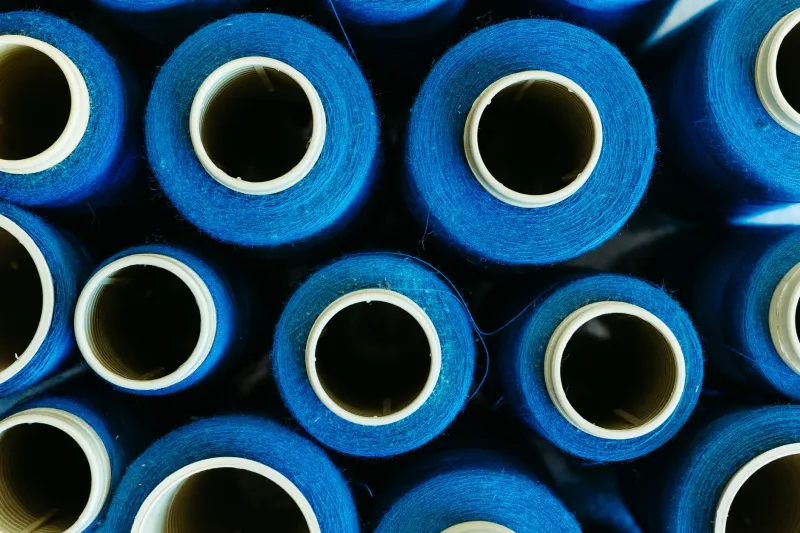
Thread selection is frequently the last decision a sewist makes and the first place a seam fails. Understanding how a thread's fiber composition, ply structure, and twist angle interact with specific fabric types allows designers and seamstresses to engineer seams that perform as precisely as the materials surrounding them.

More Margin, Less Strength: Rethinking What Seam Allowances Actually Do
Fabric Science & Construction

More Margin, Less Strength: Rethinking What Seam Allowances Actually Do

The assumption that wider seam allowances produce more durable garments is one of construction's most persistent misconceptions. In practice, allowance width interacts with fabric weight, weave density, and stitch selection in ways that can undermine rather than reinforce a seam's integrity. This article examines the conditions under which generous margins fail — and what experienced designers specify instead.

Beyond the First Wash: Understanding Residual Shrinkage and How to Engineer Against It
Fabric Science & Construction

Beyond the First Wash: Understanding Residual Shrinkage and How to Engineer Against It

Pre-washing a fabric before cutting is widely accepted as standard practice, yet finished garments continue to lose dimension across subsequent laundering cycles. Understanding the layered mechanics behind residual shrinkage—from loom tension memory to fiber-level moisture absorption—equips designers and sewists with the technical tools to forecast and compensate for changes that a single pre-wash cannot address.

What the Label Doesn't Say: Decoding Blend Percentages to Anticipate Shrinkage, Dye Loss, and Care Demands
Fabric Science & Construction

What the Label Doesn't Say: Decoding Blend Percentages to Anticipate Shrinkage, Dye Loss, and Care Demands

Fiber content labels are rarely read with the scrutiny they deserve, yet the specific percentages and the order in which fibers are listed encode critical information about how a fabric will respond to washing, dyeing, and long-term storage. Understanding how to interpret blend ratios allows designers and sewists to predict performance failures before they occur—and to make sourcing decisions grounded in end-use reality rather than manufacturer positioning.

Outside the Grade: How Luxury Designers Are Weaponizing Non-Standard Fabrics
Fabric Science & Construction

Outside the Grade: How Luxury Designers Are Weaponizing Non-Standard Fabrics

A quiet but consequential shift is reshaping how high-end designers approach material sourcing: a deliberate turn away from conventionally graded mill specifications toward irregular deniers, unconventional fiber blends, and experimental weave structures that defy standard classification. This movement challenges long-held assumptions about what constitutes quality in textile production and forces pattern makers and sewists to rethink how they handle the unpredictable. Understanding the technica

Thread Count Is a Marketing Term: How Fiber, Yarn, and Weave Structure Actually Control Fabric Opacity
Fabric Science & Construction

Thread Count Is a Marketing Term: How Fiber, Yarn, and Weave Structure Actually Control Fabric Opacity

Thread count has long been sold as a proxy for fabric quality, but when it comes to opacity, it is one of the least reliable metrics a designer can use. The true determinants of what a garment conceals or reveals lie in fiber morphology, yarn twist, and weave geometry. Understanding these variables gives designers precise control over transparency without relying on numbers that routinely mislead.

What Your Hands Already Know: Using Tactile Clues to Forecast How a Fabric Will Age
Fabric Science & Construction

What Your Hands Already Know: Using Tactile Clues to Forecast How a Fabric Will Age

Before a single pattern piece is cut, the fabric in your hands is already communicating its future. Learning to interpret crush recovery, surface resilience, and frictional resistance as diagnostic signals can prevent costly construction errors and reveal the true longevity of any textile.

Clockwise or Counter: How Yarn Twist Direction Shapes Drape, Durability, and the Way Fabric Behaves Under the Needle
Fabric Science & Construction

Clockwise or Counter: How Yarn Twist Direction Shapes Drape, Durability, and the Way Fabric Behaves Under the Needle

The direction in which fibers are twisted during yarn formation—a detail invisible to the naked eye without close inspection—has measurable consequences for how a finished fabric drapes, wears, and responds to cutting and sewing. Understanding S-twist and Z-twist mechanics allows designers and seamstresses to make more precise fabric selections and anticipate performance before a single seam is sewn. This guide examines the science behind twist direction and translates it into practical guidance

The Invisible Treatment: How Post-Production Chemical Finishes Compromise Sewability and Long-Term Garment Integrity
Sustainable Design & Sourcing

The Invisible Treatment: How Post-Production Chemical Finishes Compromise Sewability and Long-Term Garment Integrity

A fabric's behavior on the cutting table and under the needle is shaped not only by its fiber content and weave structure, but by the chemical treatments applied after weaving or knitting—finishes that are rarely disclosed on a bolt end and almost never visible to the eye. Sizing agents, durable press treatments, water repellents, and flame retardants each introduce specific sewing and pressing complications that can compromise construction quality and reduce garment longevity. This guide examin

Elastic Memory and Its Limits: The Molecular Reasons Stretch Fabrics Lose Their Shape
Fabric Science & Construction

Elastic Memory and Its Limits: The Molecular Reasons Stretch Fabrics Lose Their Shape

Stretch fabrics promise recovery, but that promise degrades with every wear cycle, every wash, and every hour of sustained tension. Understanding the molecular mechanics behind fabric relaxation allows designers to specify materials that genuinely hold their form—and to test those claims before a single garment reaches a customer.

Specifying the Intangible: How to Translate Fabric Hand-Feel Into Precise Mill Language
Fabric Science & Construction

Specifying the Intangible: How to Translate Fabric Hand-Feel Into Precise Mill Language

Hand-feel is among the first things a designer registers when touching a new fabric, yet it is among the last things to appear in a technical specification. Bridging that gap—moving from sensory impression to measurable, communicable criteria—is both a craft skill and a technical discipline that separates precise sourcing from costly approximation.

What the Selvage Knows: Decoding the Woven Edge as a Guide to Fabric Quality and Mill Integrity
Sustainable Design & Sourcing

What the Selvage Knows: Decoding the Woven Edge as a Guide to Fabric Quality and Mill Integrity

The selvage—that narrow, finished edge running the length of every woven fabric—carries more information about a fabric's origin, construction quality, and manufacturing standards than most buyers ever pause to examine. Learning to read selvage markings, density variations, and edge conditions transforms an overlooked border into a reliable diagnostic tool. This guide teaches designers and sewers how to evaluate selvages systematically before committing to a purchase.

Stretch Without Staying Power: The Science Behind Elastane Failure in High-Performance Fabrics
Fabric Science & Construction

Stretch Without Staying Power: The Science Behind Elastane Failure in High-Performance Fabrics

Elastane content percentages printed on a bolt end tell only a fraction of the story when it comes to long-term stretch performance. Understanding how fiber architecture, fabric construction, and finishing chemistry interact with elastane reveals why some stretch fabrics outlast others by years—and why a lower elastane percentage often signals superior durability. This guide examines the mechanics of elastic recovery, heat degradation, and chlorine breakdown to help designers make better-informe

Same Fiber, Different Fabric: What Cotton Percentages Cannot Tell You About Performance
Fabric Science & Construction

Same Fiber, Different Fabric: What Cotton Percentages Cannot Tell You About Performance

A garment label reading '100% cotton' tells you surprisingly little about how that fabric will behave on the body, in the wash, or under a needle. Fiber processing, yarn construction, and finishing treatments transform the same raw material into textiles that bear almost no resemblance to one another. This article decodes what manufacturers omit from care tags—and why those omissions matter more than the fiber content itself.

Calculating the True Cost of Nap, Pile, and Pattern: A Yardage Planning Guide for Directional Fabrics
Fabric Science & Construction

Calculating the True Cost of Nap, Pile, and Pattern: A Yardage Planning Guide for Directional Fabrics

Velvet, corduroy, and large-scale prints share one costly characteristic: they demand more fabric than the pattern envelope suggests. Nap direction, pile depth, and pattern repeat intervals each impose layout constraints that can consume an additional 15 to 25 percent of yardage. This guide provides the mathematical framework and practical methodology for planning fabric requirements accurately before you cut.

Grams Per Square Meter: The Hidden Variable That Governs How Every Garment Lives on the Body
Fabric Science & Construction

Grams Per Square Meter: The Hidden Variable That Governs How Every Garment Lives on the Body

Fabric weight—measured in grams per square meter—is among the most consequential yet least discussed variables in garment construction. Understanding how GSM interacts with fiber content, end-use, and construction technique allows designers and sewists to make material selections that perform precisely as intended. This guide examines the mechanics of fabric weight from the bolt to the body.

Off-Grain, Off-Fit: Diagnosing the Fabric Direction Errors That Quietly Ruin Garments
Fabric Science & Construction

Off-Grain, Off-Fit: Diagnosing the Fabric Direction Errors That Quietly Ruin Garments

Grain line is among the most foundational concepts in garment construction, yet it is also among the most frequently misunderstood—or quietly ignored. When a garment twists, pulls, or refuses to hang correctly despite accurate cutting and careful sewing, fabric direction is almost always implicated. This guide examines grain, bias, and nap in technical depth, with diagnostic approaches for identifying direction-related failures before and after construction.