Outside the Grade: How Luxury Designers Are Weaponizing Non-Standard Fabrics
For most of the twentieth century, the language of textile quality was largely the language of standardization. Mill grading systems, denier specifications, thread counts, and tensile benchmarks served as shared vocabulary between fabric producers and the designers who sourced from them. A fabric either met the grade or it did not. The system was orderly, predictable, and—as a growing number of high-end American and international designers now argue—creatively limiting.
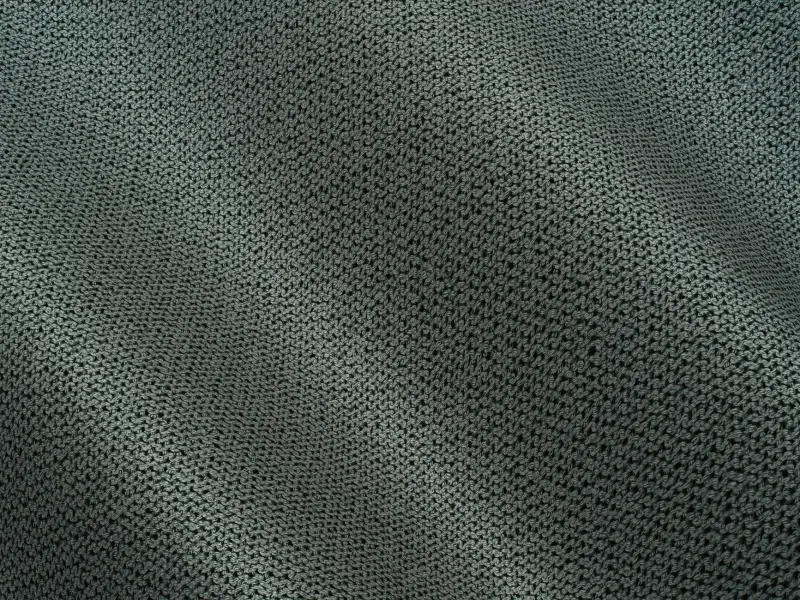
What has emerged in recent seasons is a deliberate counter-movement. Designers at independent luxury labels and, increasingly, at established houses are actively seeking out fabrics that fall outside conventional grading systems: yarns spun to irregular denier, blends that combine fibers with fundamentally incompatible care profiles, and weave structures that produce intentional inconsistency in surface texture. The goal is not imperfection for its own sake. It is differentiation through material authenticity—a quality that no standardized specification can fully capture or replicate.
What Standard Mill Grading Actually Measures—and What It Misses
To understand why designers are pushing against mill grading systems, it helps to understand what those systems were designed to do. Conventional grading evaluates fabric against a set of measurable performance benchmarks: yarn evenness, weight consistency within a tolerance range, colorfastness, dimensional stability after laundering, and surface regularity. These metrics are genuinely useful. They predict how a fabric will behave in industrial cutting rooms, survive high-volume production runs, and perform across a broad consumer base.
What they do not measure is character. A fabric woven from hand-reeled silk noil will exhibit natural slubs—irregular thickenings in the yarn—that a grading system classifies as defects. A linen blended with a small percentage of raw, unprocessed nettle fiber may show variation in surface sheen that falls outside acceptable uniformity ranges. A wool cloth woven on a vintage dobby loom might carry slight tension inconsistencies that cause it to behave unpredictably under steam pressing. By every standard metric, these fabrics underperform. By the criteria that matter to a certain tier of designer and consumer, they are precisely what is desired.
The Technical Reality of Working with Off-Grade Materials
Choosing to work with non-standard fabrics is not simply an aesthetic decision. It carries significant technical consequences that ripple through every stage of garment construction, from pattern drafting to final pressing.
Irregular denier and yarn inconsistency present some of the most immediate challenges. When a yarn's denier varies along its length—as it naturally does in hand-spun or minimally processed fibers—the resulting fabric will have localized differences in weight and drape. A pattern piece cut from one section of the cloth may behave differently than an identical piece cut from another. Sewists working with these materials must develop an intuitive understanding of the fabric's grain behavior across its full width rather than assuming uniformity.
Unconventional fiber blends introduce compatibility problems that standard blends are engineered to avoid. Combining a natural fiber with high moisture absorption, such as linen, with a synthetic that has negligible absorbency, such as a recycled polyester, can produce differential shrinkage rates that distort seam lines after laundering. These blends are not inherently unworkable, but they demand that the maker understand the behavior of each component fiber independently before predicting how the composite will perform. Preshrinking protocols, interfacing choices, and seam construction methods all require adjustment.
Experimental weave structures may produce fabrics with directional instability that exceeds what pattern makers typically account for. An open-structure leno weave, for example, has comparatively little resistance to lateral distortion. A double cloth with an unconventional interlocking pattern may behave as two distinct layers in some areas and as a unified structure in others. Working with these materials requires the kind of careful grain mapping and stay-stitching discipline that is often abbreviated in production environments but cannot be omitted here.
Why the Unpredictability Is the Point
The designers championing non-standard fabrics are not indifferent to these technical complications. Many are acutely aware of them. The argument they make—and it is increasingly persuasive within certain segments of the American luxury market—is that the unpredictability of these materials is inseparable from their value.
A garment made from a fabric with natural slub variation will look different from every angle and in every light. A cloth woven with an experimental structure will drape in ways that no CAD rendering could predict, creating silhouette moments that feel genuinely discovered rather than engineered. This quality of material surprise is, in the current market, a form of luxury that standardized production cannot replicate. It signals handcraft, intentionality, and scarcity—all of which command premium positioning.
There is also a sourcing dimension worth noting. Many non-standard fabrics originate from small mills operating outside the volume requirements of major fashion supply chains, from artisan producers in regions like western North Carolina, the Hudson Valley, or rural New England where small-scale weaving traditions persist, or from international producers who have never fully adopted industrial grading conventions. Sourcing from these producers is, in itself, a statement about the designer's relationship to the broader textile economy.
Adapting Pattern and Construction Practice
For pattern makers and sewists engaging with non-standard fabrics, the practical adjustment is fundamentally one of slowing down and observing. The assumption that a fabric will behave according to its fiber content label is insufficient. Before drafting begins, the material deserves a full handling assessment: how does it respond to steam? Where does the grain feel most stable? Does the surface have a direction, even if there is no obvious nap? How does it behave when folded on the bias?
Seam allowances may need to be widened to accommodate fraying at cut edges, which is more common in open or loosely constructed weaves. Interfacing selections should be tested rather than assumed—a fusible that bonds cleanly to a conventional woven may cause surface distortion on a fabric with irregular surface texture. Pressing should be approached incrementally, with test samples, because non-standard weave structures can be permanently damaged by heat and pressure protocols that would be routine on mill-graded cloth.
Finally, fitting should be conducted on the actual fabric, not on a muslin approximation. The behavior of a non-standard material under the weight and movement of a body is often sufficiently distinctive that muslin fittings provide limited predictive value.
A Different Measure of Quality
The movement toward non-standard fabrics does not represent a rejection of quality—it represents a redefinition of it. Where conventional grading systems measure consistency, this approach values character. Where standard specifications prioritize predictability, these designers prioritize authenticity. The technical demands on the maker increase substantially, but so does the potential for a finished garment that is genuinely unlike anything produced through conventional means.
For those working in pattern making, couture construction, or small-batch production, understanding the technical grammar of these materials is no longer a niche concern. It is becoming a core competency for anyone who intends to work at the level where fabric and handle truly determine the outcome.