Finishing as Fingerprint: What Seam Interiors Reveal About Garment Intent, Budget, and Longevity
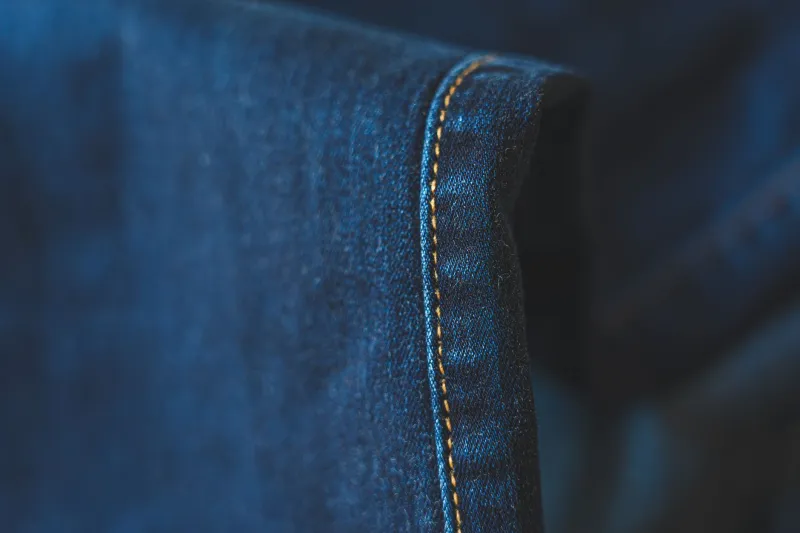
Turn a garment inside out and you are looking at a confession. The way a seam has been finished—or left unfinished—tells you more about its construction logic than any hang tag or brand story ever could. Seam interiors encode decisions made under real constraints: time budgets, thread costs, machine availability, and the designer's honest assessment of how many wash cycles the piece will endure. Reading those decisions accurately is a skill that belongs at the center of any serious textile practice.
The French Seam: Investment Signaling and Its Limits
The French seam is, in many respects, the most legible of all finishing techniques. It encases the raw edge entirely within a second fold of fabric, producing a clean interior that requires no additional tools beyond the sewing machine itself. Its presence signals several things simultaneously: the maker anticipated laundering stress at the seam line, the fabric was light enough to tolerate a double-fold without bulk, and the construction schedule had room for a two-pass operation.
That last point matters more than it is usually given credit for. A French seam on a sheer blouse or a lightweight cotton voile shirt is not merely an aesthetic choice—it is a labor commitment. In production terms, it approximately doubles the machine time per seam relative to a single-pass serged finish. In a domestic workroom or a small-batch American atelier, that cost is often justifiable. In high-volume offshore production, it typically is not, which is why its presence in a mass-market garment is genuinely unusual and worth noting.
Where French seams become problematic is at curves and corners. Forcing the technique around a pronounced armscye or a tightly shaped neckline creates tension inconsistencies that can distort the seam line over time. A garment that shows French seams at straight side seams but switches to another method at curved junctions is not cutting corners—it is demonstrating technical awareness.
Bound Edges: The Haute Couture Signature and Its Commercial Derivatives
Bound seam allowances—where a separate strip of fabric, often silk organza or a lightweight woven, is folded over the raw edge and stitched down—represent the most labor-intensive finishing method in common use. Their presence in a garment is a reliable indicator of either genuine couture-level construction or a very deliberate investment in longevity.
The binding protects the raw edge from fraying while simultaneously adding structure to the seam allowance itself. In heavy wools and bouclés, this additional structure prevents the allowance from rolling or migrating under the fashion fabric over time—a failure mode that shows up on the exterior as a faint ridge along the seam line after repeated wear. The bound finish eliminates that migration pathway entirely.
Commercial approximations of this technique exist, most commonly in the form of pre-folded bias tape applied by specialized binding attachments. These are faster than hand-applied bound finishes but still substantially slower than serging. When you encounter them in a mid-market garment, they usually indicate either a domestic or near-shore production context, or a manufacturer who has made a deliberate quality statement at a specific price point.
The fiber content of the binding material itself carries information. A silk organza binding on a wool jacket seam allowance suggests a maker who understood that the binding should be lighter than the fashion fabric to avoid bulk. A heavy cotton binding on the same jacket suggests either a cost substitution or a less sophisticated approach to interior construction.
Serged Finishes: Reading the Variables Within the Default
The serged finish—produced by an overlock machine that simultaneously trims the seam allowance and encases the edge in thread loops—is the dominant finishing method in contemporary ready-to-wear production. Its near-universality makes it easy to dismiss as a generic solution, but the details of a serged finish carry more information than its prevalence implies.
Thread weight and stitch density on a serge finish are among the most telling variables. A closely set, fine-thread serge on a delicate fabric indicates that someone calibrated the machine for the specific material. A loose, heavy serge on a lightweight knit suggests that the same machine settings were applied across multiple fabric types without adjustment—a production shortcut that accelerates seam allowance fraying and can cause thread drag distortion on the fashion fabric itself.
The relationship between the serge and the straight stitch seam also reveals construction logic. In better ready-to-wear, the seam is sewn first and then serged separately, preserving the full seam allowance width and allowing for alterations. In cost-reduced production, the serge is often applied at the same time as the seam is sewn, using a single pass that combines both operations. The resulting seam allowance is narrower and non-adjustable, and the stitch line sits at the very edge of the allowance rather than at a measured distance from it.
Hong Kong Finish and Mock Variations: Craft Markers in Tailored Work
The Hong Kong finish—a bound edge technique using bias-cut strips of lining fabric rather than a separate binding tape—occupies an interesting position in the finishing hierarchy. It is less time-intensive than traditional bound edges but more precise and durable than a serge. Its presence in structured garments, particularly unlined blazers and tailored coats, is a strong indicator of a maker with tailoring training or strong tailoring influence.
The quality of a Hong Kong finish is legible in the tightness of the bias turn and the consistency of the stitch line. Bias strips that have been cut accurately will fold and press cleanly; strips cut slightly off-grain will twist along the allowance edge, creating small ripples that are visible when the seam is opened flat. This is a detail that distinguishes a maker who understands bias behavior from one who is applying the technique procedurally.
Unfinished Edges: The Information in Absence
An unfinished seam allowance is not always a sign of negligence. In fully lined garments, raw edges are often left intentionally, since the lining encases the interior and fraying is not a functional concern. The key diagnostic question is whether the unfinished edge is contextually appropriate—that is, whether the garment's construction logic accounts for it—or whether it represents a step that was simply omitted.
A lined jacket with unfinished seam allowances at the hem facing, where the lining does not extend, is a different situation from an unlined blazer with unfinished edges throughout. The former may be an acceptable production decision; the latter is a longevity liability that will manifest as fraying within the first year of regular wear.
Constructing a Complete Picture
No single finishing technique tells the whole story of a garment's construction. The most useful approach is to read the interior as a system: do the finishing choices remain consistent across different seam types and locations, or do they shift in ways that suggest cost reduction at specific points? Does the finish match the behavior of the fashion fabric, or does it appear to have been applied without regard for material properties?
A garment that uses French seams at the side seams, serged finishes at the armscye, and unfinished edges at the hem facing is telling you something specific about where its maker allocated time and where they did not. That pattern of allocation is the construction signature—and once you learn to read it, every garment becomes a document.